
How to Choose a Christmas Theme That Best Fits your Home
Oct
To choose a Christmas theme for your home, start with the room you will decorate and the ornaments you already enjoy using. Pick a main colour, a supporting colour and a finish you want to repeat, then try a small group of decorations in the room before buying more. The aim is a home that feels festive and personal, not a perfect match to someone else’s display.
Let your Christmas décor match your home décor

Look at the background behind your decorations: the wall, curtains, sofa and large furniture. These colours will stay in the room throughout Christmas, so use them as a starting point. Place a few ornaments beside the tree location and view them in daylight and with your usual evening lighting. A pale decoration can look quite different against a dark curtain than against a white wall.
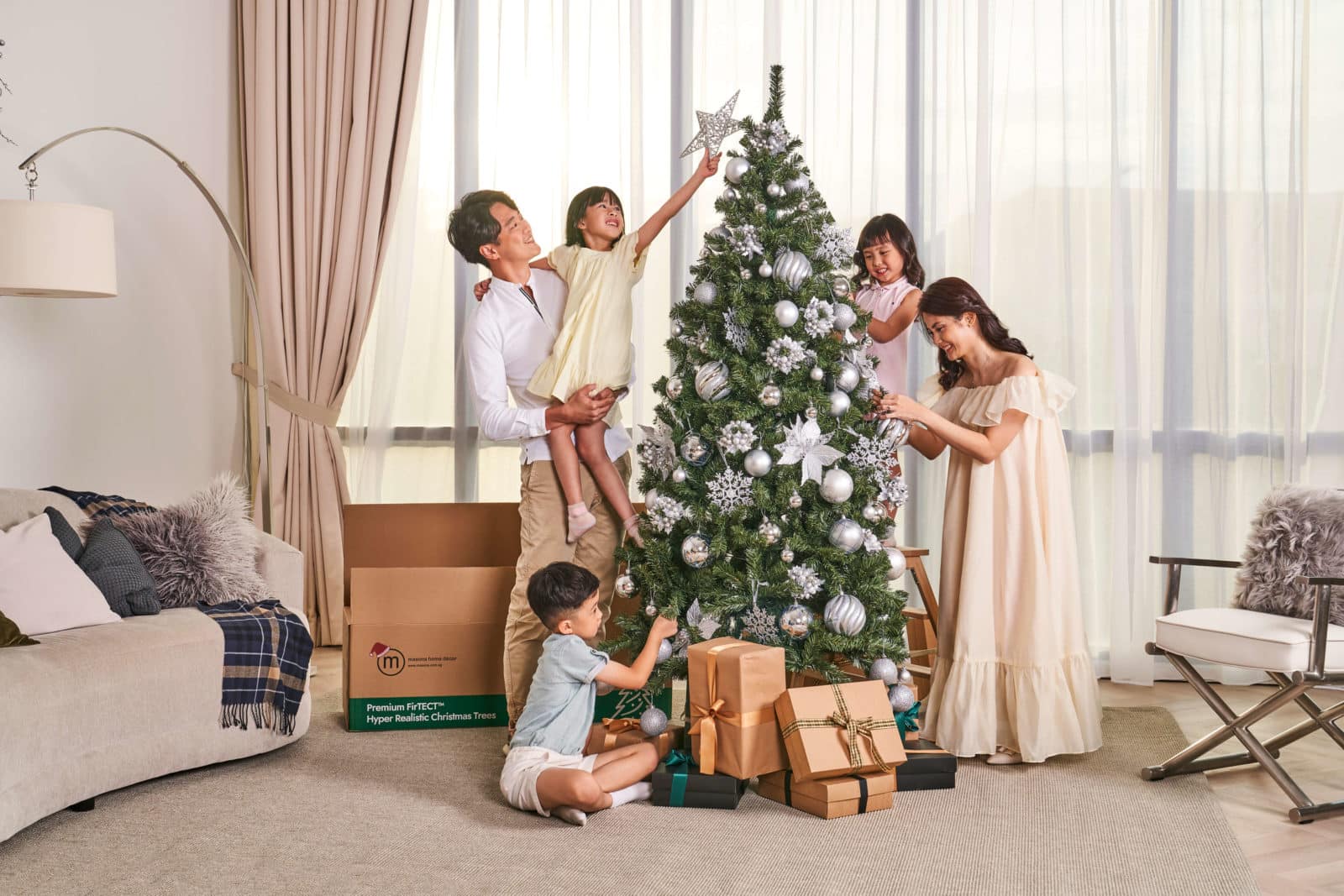
For a warm-toned room, try red with gold or champagne accents. For a quieter look against grey, white or dark furniture, try blue with silver ornaments. These are options, not rules: a neutral room can also carry a bright, contrasting theme. Choose the combination you like in your actual room rather than assuming every warm room needs gold or every white room needs silver.
Ensure continuity throughout your home

Choose one repeated detail to connect your tree, entrance and dining area. It might be the same ribbon colour, a metallic finish or a shape such as a star. The decorations do not all need to be identical: a red-and-gold tree can be echoed by a red bow on a Christmas wreath and a few gold details on the table.
Decorate the main viewing area first, then look towards the next space from the doorway. Repeat just enough of your chosen detail to make the transition feel intentional. In a compact home, one tree and one smaller display may give you the effect you want without filling every surface. Keep the places you use for meals, work and moving around practical.
Settle on a colour scheme that adds texture

Start with a simple palette you can test: one main colour, a supporting colour and a repeated finish. For example, red baubles with green foliage and gold accents create a different look from blue baubles with white details and silver accents. You do not need a fixed ratio or a new collection of ornaments; begin with the pieces you already own and adjust by eye.
Arrange a small sample together before decorating the whole tree. Include the largest ornament, a smaller piece and any ribbon you intend to use. If one item dominates, try moving it, reducing how often you repeat it or pairing it with a quieter finish. If everything blends into the background, introduce a contrasting shape or tone rather than immediately adding more colours.
Texture adds variety within the same palette. Try a mix of smooth and patterned surfaces, or rounded baubles beside pointed leaves and soft bows. A monochrome theme can still feel detailed when the shapes and finishes differ. If you prefer a colourful tree, use a repeated ornament shape or ribbon to connect the colours instead of forcing the whole collection into a single shade.
Choosing a theme around nature

A nature-inspired theme can start with foliage, pine-cone decorations and artificial flowers. Choose the actual colours and shapes together: a soft floral arrangement and a bold berry-and-pine-cone display can both use natural motifs while creating different looks.
Repeat one of those motifs in a second display, such as a wreath or a Christmas garland. Leave some foliage visible so the decorative pieces remain distinct. Check each item’s listed dimensions and intended use before deciding whether it belongs on the tree, a table or an entrance display.
Choosing a theme around shapes
A favourite shape can be the theme’s starting point, especially if your ornaments come in several colours. Stars, flowers or rounded baubles can repeat across the tree and a small tabletop display. Choose one main motif and let other pieces support it, rather than buying every decoration in the same shape.
For a faceted accent, the Mersin Diamond Bauble is an example from Mason’s ornament range. Compare its available options with your existing pieces before choosing it. You can also make a treasured family ornament the starting point: repeat one of its colours elsewhere, while leaving that special piece easy to see.
Should you use homemade or store-bought decorations?
Use whichever mix makes sense for your home. Handmade pieces and familiar decorations can be part of a coordinated theme; they do not have to be replaced with a complete new set. Lay out what you own, keep the pieces you want to display and identify the specific gap: perhaps a ribbon that repeats the palette, a few larger ornaments or a different tree topper.
Shop for that missing role rather than buying more of everything. Use the Christmas ornaments collection for pieces that go on the tree, and the home decorations collection for room displays. Read each product’s dimensions and contents before ordering; a photograph of a styled display does not mean every object shown is included.
Before you commit, check your small sample in the room, confirm the repeated detail you will carry into the next space, and decide what you can reuse. Once the palette is settled, follow our step-by-step Christmas tree decorating guide for the order of lights, ribbon, baubles and finishing touches.